


Preparing For Joint Replacement Surgery
Once we have determined that joint replacement is right for you, you will need several weeks to prepare. We will perform some preliminary tests including a physical examination, x-rays, or blood tests to evaluate your overall health prior to surgery.
You may also want to prepare your home for when you return from surgery. Make sure easily accessible, premade foods are available. Remove any trip hazards. Consider having a friend or family member stay with you for several days after surgery.

The Total Joint Replacement Surgery Procedure
Your joint replacement surgery itself will take about one hour, but you will spend much of the day preparing for it and in recovery. During the surgery, the damaged cartilage and bone is removed from your joint and replaced with prosthetic components that mimic the shape and movement of a natural joint.





Knee Replacement Surgery
During a partial or total knee replacement surgery, prosthetic components are placed over the ends of the damaged bones and an insert is placed between those components to recreate the hinge of the knee joint.
Knee Replacement Surgery Pictures
The photos below show x-rays of a healthy knee, a severely arthritic knee, and knees after knee replacement surgery.

HEALTHY KNEE

SEVERE ARTHRITIS

AFTER PARTIAL REPLACEMENT

AFTER TOTAL REPLACEMENT

Robotic Knee Replacement
Robotic knee replacement surgery uses cutting-edge technology to further improve patient outcomes. As in traditional knee replacement surgery, we will remove damaged bone and cartilage and replace it with an artificial joint, but it will be with assistance from a robotic arm, which allows for precision.
Hip Replacement Surgery
Hip replacement surgery is a reliable option for decreasing pain and increasing function in a joint that has been damaged. In a total hip replacement, we will make an incision in the skin to access the hip joint. The damaged cartilage and bone will be removed, and we will position implants to restore the alignment and function of your hip.
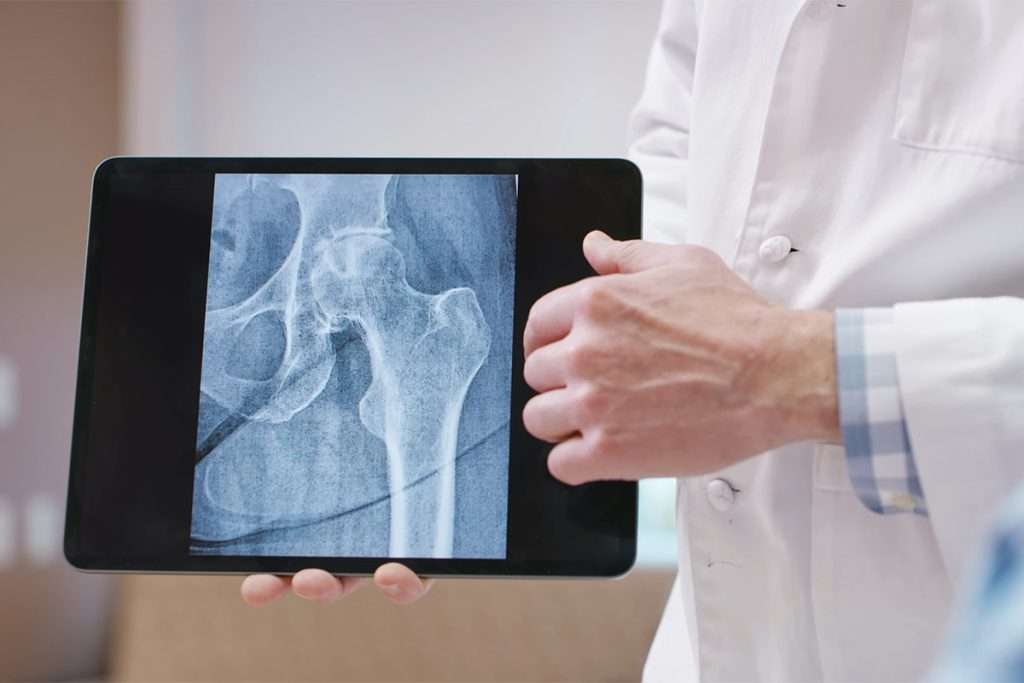
Anterior Vs. Posterior Hip Replacement
There are different surgical approaches used to access the hip joint. Two of the most common are explained below.

Anterior Hip Replacement
The incision for this approach is made on the outer side of the front of the hip. Muscles are then moved apart to provide access to the hip joint. One advantage of the anterior approach is that the surgeon is able to use live x-rays throughout the procedure to ensure proper placement and alignment of the new hip joint. This approach often results in a faster recovery time because there is less muscle damage and soft tissue injury.

Posterior Hip Replacement
This approach is performed through an incision made on the side and back of the hip. The gluteus maximus muscle is split and the tendons on the back of the hip are released to expose the hip joint. The surgeon then replaces the damaged areas and inserts the prosthetic components.