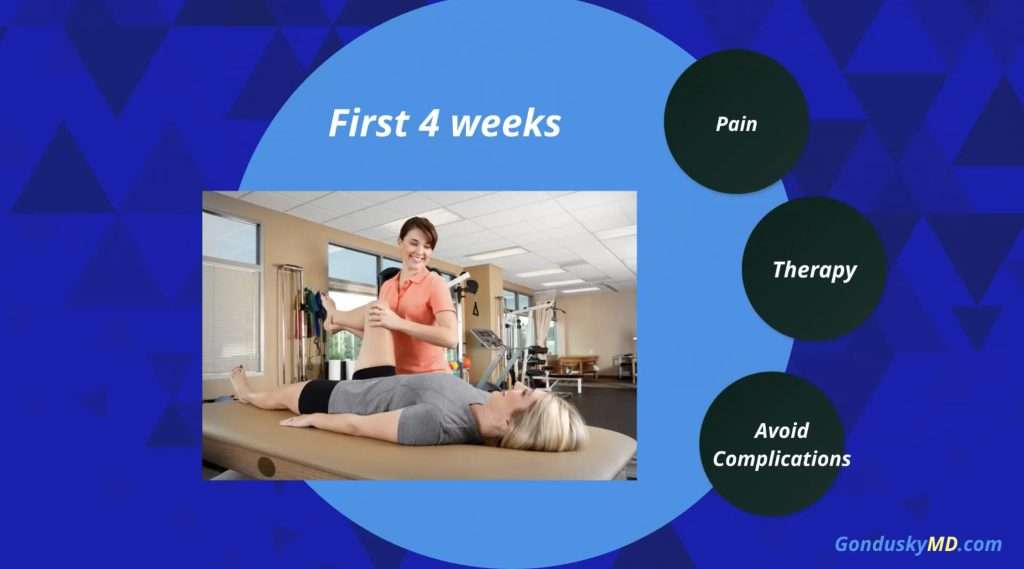

Patients commonly ask about recovery and therapy/rehabilitation after knee and hip replacement. They want to know what to expect, and when they can return to work or day to day activities.
Replacement surgery is significant, but recovery is quicker and easier than it was years ago. We attribute this primarily to improved surgical techniques and pain control. We can now easily and safely mobilize patients hours after surgery, walking with full weight bearing down the hall and up and down stairs.
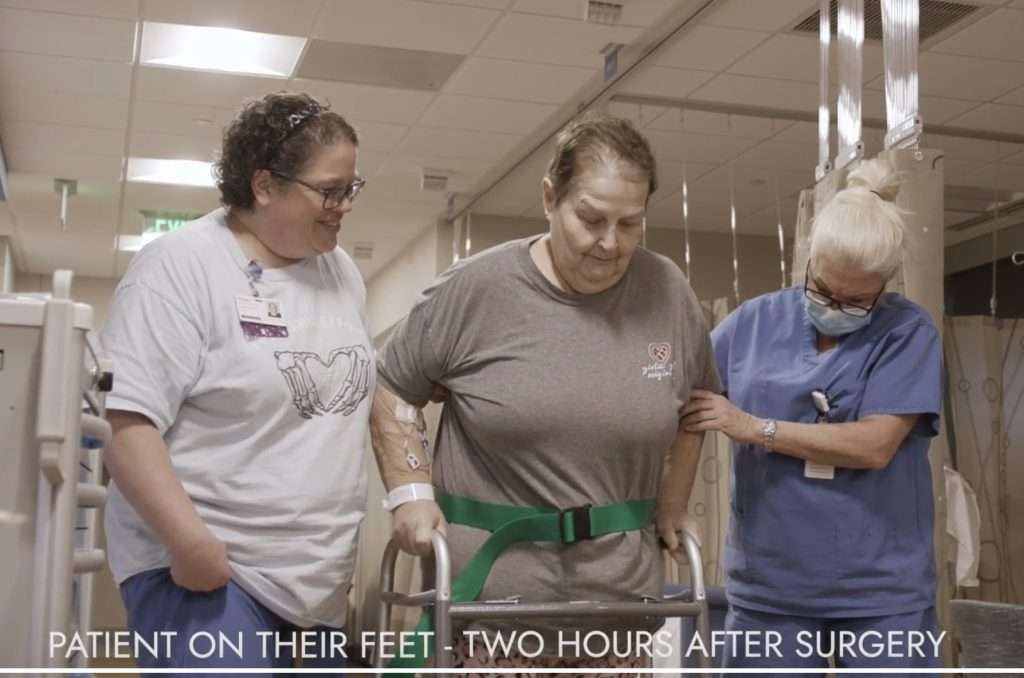
Hip Replacement
Hip replacement tends to be an easier recovery than knee replacement. Patients most commonly have little to mild pain early that subsides quickly, over initial hours and then a few days after surgery, such that many patients need little to no pain medicines after the first few days after surgery. Most hip patients can drive within a week or two after surgery. By 4 weeks almost all patients are walking with no assistive devices and are comfortable to start ramping up activities to full. At this point, with a healing incision and good function, most patients can enjoy travel and fun activities safely. Getting back to work depends on the job. For office work at home, a week or two is sufficient. For office jobs that require a drive in, 3-4 weeks is often possible. Very physical demanding jobs can require 4-6 weeks to return to.
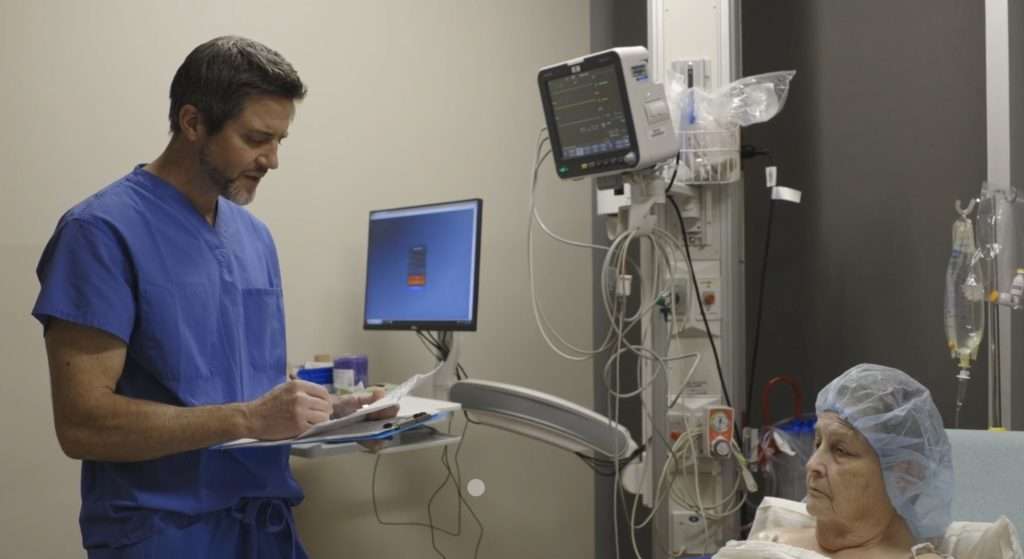
Knee Replacement
Total knee replacements follow a similar pattern of recovery, but they do require more therapy and time to recover. Knee recovery also tends to be more variable than hips. For instance, it is very rare for us to see a patient for hip follow-up at 4 weeks who is not feeling good. Knee recovery variability means that some patients take little to no pain medicine and look incredible at 4 weeks, and others require pain medicines over the first few weeks to stay comfortable and are slower-going at their 4 week follow-up. In general, patients will be able to walk comfortably throughout the time period of recovery. Discomfort requiring pain medicines is common over the first 5 days or so. I usually tell people that for the first 2 weeks after knee replacement they will be a bit achy and grumpy, meaning they will be mobile but not enjoying normal activities yet, and therapy will engage them to focus on getting good knee motion and mobilization. Between 2 and 6 weeks pain improves significantly every week, such that most left knee replacements can drive within a few weeks (longer for right knees given the need to use that leg for brake/gas). By 6 weeks, most will be “pretty good,” and will be able to enjoy normal light activities, but they will not be able to get to more aggressive activities yet, with strengthening therapy to do to really improve stability and confidence on the knee. Percentage wise, this has been described as being at about 33% recovered at 6 weeks and at about 85% at 3 months. Travel is generally okay at about 6 weeks after knee replacement. Return to work is generally possible for home-office work after a week (but make sure you are mobilizing frequently!), standard office work in 3-4 weeks, light activity work in about 6 weeks and more aggressive jobs between 6-8 weeks. Therapy is very important after knee replacement. Early phases of therapy (the first 4-6 weeks) focus on range of motion (ROM) and frequent mobilization. After 6 weeks, the focus shifts to strengthening to improve stability and allowance for return to more aggressive activities. Please note that the above information is for total knee replacement. Partial knee replacement is less invasive, easier, less painful, and with a quicker recovery (generally 2-4 weeks ahead of the total knee replacement recovery).
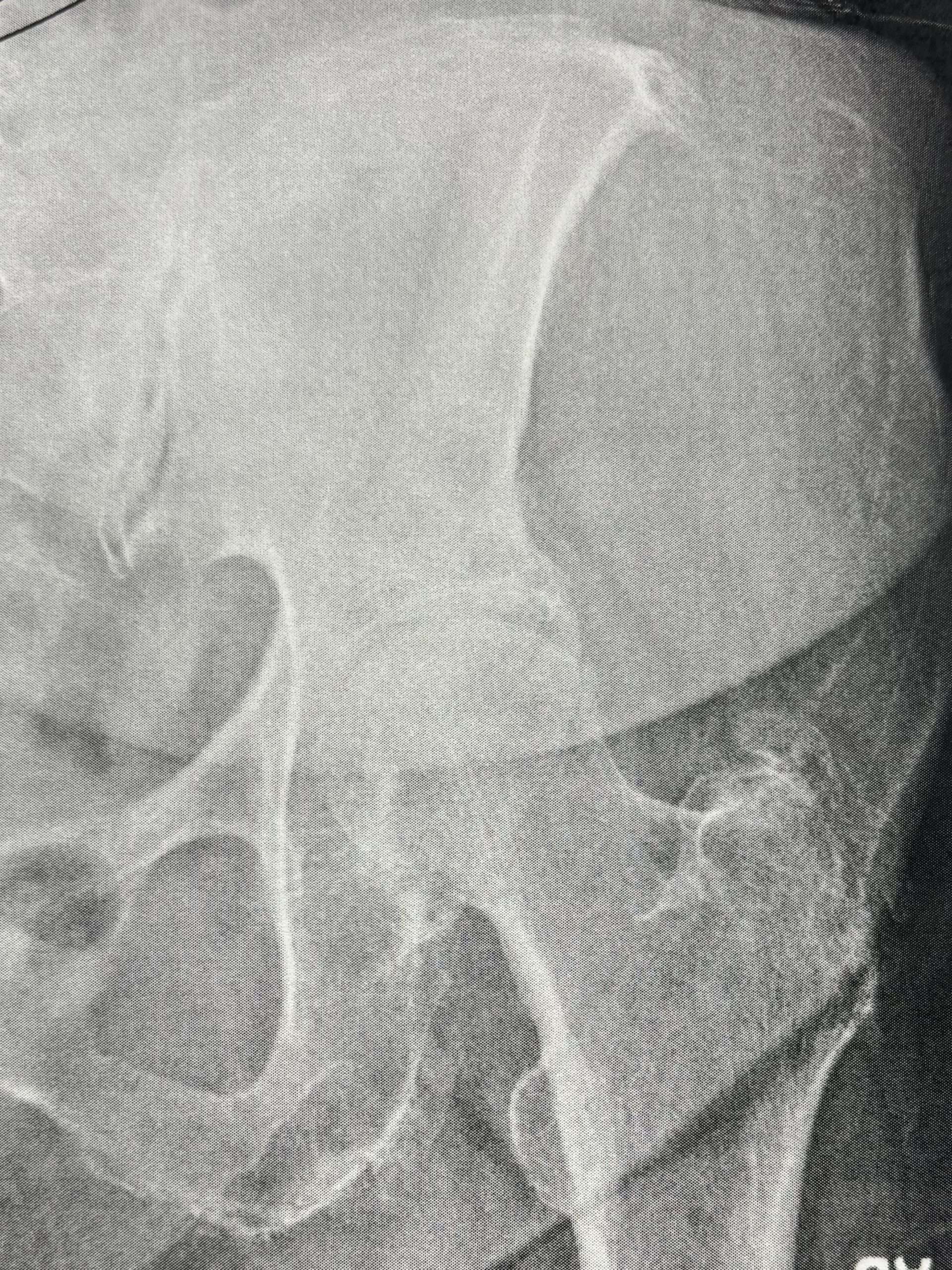
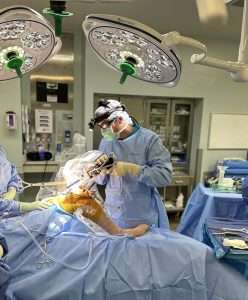
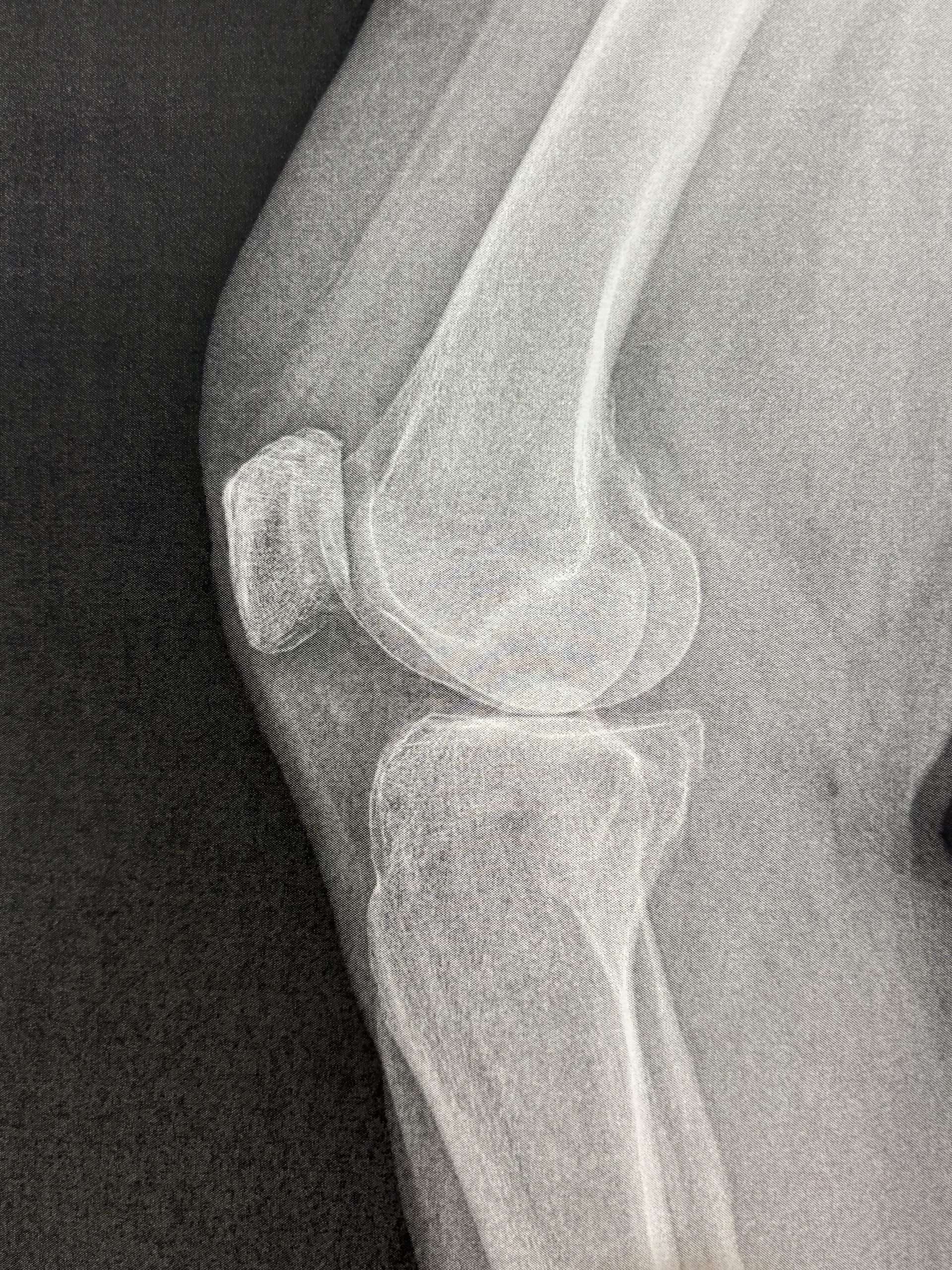
I hope this will give you a general sense of recovery after knee or hip replacement. In the last decade that I have been performing these surgeries, we have shifted from 2-3 day hospital stays to outpatient surgery, and patients describe less and less pain every year as we refine all of our pathways and individualize them. Keep in mind that one of the reasons that it is difficult to find good information about recovery is that there IS a lot of variability. I am often amazed when a total knee replacement patient tells me they had no pain after surgery and took no pain medicines. This does occur, but it is not the average. Others struggle more, so it is tough to give a patient an exact idea of what their recovery will be like, but the above information will give a rough draft to be able to plan for life after surgery. Use your judgement and be honest with yourself about your pain tolerance, hobbies, and job requirements, and you should fall somewhere within these recovery ranges.