

FAQs
Welcome to the Frequently Asked Questions (FAQs). Here, we address common concerns and questions about joint replacements, treatments, and procedures. Whether you’re seeking information about surgical options, rehabilitation, or preventative care, our goal is to provide clear, comprehensive answers to help you make informed decisions about your orthopedic health. Our team of experienced professionals is dedicated to supporting you on your journey to improved mobility and well-being.
Total Joint Replacement Surgery Overview
Severe arthritis or other medical conditions can wear down the cartilage in your joints, causing pain, stiffness, and inflammation. This pain can limit your ability to perform daily activities, including walking or climbing stairs. The first line of treatment for joint pain and limited function is always nonsurgical. Modifying your activities, using a cane or a walker, pain medications, and physical therapy should all be options that you pursue before deciding to have joint replacement surgery. However, if these treatments have failed to provide pain relief, you may be a candidate for joint replacement surgery.
If nonsurgical treatments like medications, physical therapy, activity modifications, or the use of devices like braces or a cane do not relieve your pain, your doctor may recommend joint replacement. It is a very reliable way to take away pain and increase your function and mobility. Your surgeon will evaluate your medical history, perform a physical exam, and perform tests to determine if total joint replacement surgery is right for you.
Minimally-invasive surgeries are designed to help patients experience less pain and heal more quickly than they would with traditional surgical approaches. Typically, these surgical procedures use shorter incisions or the surgeon changes the location of the incision, with the goal of reducing pain after surgery and facilitating an accelerated recovery time. In minimally-invasive surgeries, less muscle and soft tissue are injured than in traditional surgical approaches.
Minimally-invasive techniques and outpatient surgery may be less suitable for patients who:
- Are overweight or have severe medical problems
- Have a very complex deformity of the hip or knee joint
Most patients are good candidates for outpatient surgery. Dr. Gondusky will evaluate your specific surgical need and overall health to determine if outpatient surgery is right for you.
The surgical procedure itself usually takes about 1 hour, but you will spend most of the day at the facility preparing for surgery and in recovery. Most patients go home the same day of their surgery. Before leaving the facility we make sure that you are comfortable, have done well with therapy, and have everything you need at home.
Dr. Gondusky recommends patients ask someone to assist them at home during their recovery. Patients tend to be more comfortable in their home environment and there is a lower risk of infection. These days, it is very uncommon for a patient to meet insurance criteria eligibility for a rehab facility. Dr Gondusky and his team will discuss your plan prior to your surgery.
After surgery you will feel some pain as a normal part of the healing process. Dr. Gondusky and his team work to reduce pain by using multimodal analgesia – combining different types of medication for pain relief. The most commonly combined medication groups include local anesthetics, NSAIDs, and acetaminophen. The goal is to utilize multiple, benign medicines in order to control pain and limit opiates. You will learn more about this multimodal analgesia plan in your preoperative education. It is a very important part of your care. Dr. Gondusky prides himself on being able to bring patients through these significant surgeries with less pain than patients experienced years ago; this is done with a customized and tailored pain control plan his team personalizes for you.
People with joint replacements do usually set off metal detectors. If an alarm is activated, tell the screening agent about your joint replacement. Or you may prefer to mention it to screening agents prior to entering a metal detector. Screening agents have protocols in place to effectively screen people with joint replacements, and they realize millions of Americans have had these surgeries. You do not need to carry specific documentation about your joint replacement.
All surgeries come with some degree of risk. Although complications are relatively rare, they can occur and Dr. Gondusky and his team do multiple things to prevent them. A few of the complications that can cause serious problems after your surgery include blood clots, infection, or problems with the heart or lungs.
Blood clots can form in the legs and move to the lungs, which can be fatal. This happens extremely rarely after joint replacement surgery, and we use blood thinners and early mobilization to help prevent that.
Infection after joint replacement surgery happens when bacteria cling to the replacement components. Surgery is often required to remove the components and eradicate the infection. We use sterile techniques along with antibiotics during and after surgery to prevent infections.
Rarely, heart and lung problems can occur after joint replacement surgery. Prior to your surgery, we do many things to ensure your health is optimized and that you are a suitable candidate to proceed with the surgery. Your primary care doctor will help us make sure you are medically fit for surgery. And sometimes, we ask specialists like cardiologists to aid in the preoperative workup as well. This optimization process is important to ensure success. Medical problems are minimized with the work we do preoperatively, curating your care to what is best for you, as well as expert anesthesia, surgical technique, and rapid mobilization.
There are several characteristics one should look for when searching for the ideal joint replacement surgeon. In addition to having subspecialty training with completion of a hip and knee reconstruction fellowship, qualifications to look for include board certification, membership of specialty organizations such as the American Academy of Orthopaedic Surgeons (AAOS) and the American Association of Hip and Knee Surgeons (AAHKS), active in research, has good patient reviews, an outstanding local reputation, and has a high-volume practice with good results for the procedure you need. This information is not always easy to come by, particularly volume and results data. Dr. Gondusky prides himself on meeting all of these criteria. You can learn more about his expertise and results here.
There is a lot of information available on the internet, but as we all know not all of it is truthful and objective. Be aware of things that sound “too good to be true,” and especially when the site putting the information out ultimately has something to sell you. Dr. Gondusky points patients to reputable, objective, honest, and scientific sites you can trust. For great general information about orthopedic diagnoses and treatment options, visit the official patient information site of the American Academy of Orthopaedic Surgeons (AAOS). For a lot of great information about hip and knee conditions, treatment options, and surgery, visit the “For Patients” section of the American Association of Hip and Knee Surgeons (AAHKS).

Knee Replacement Surgery
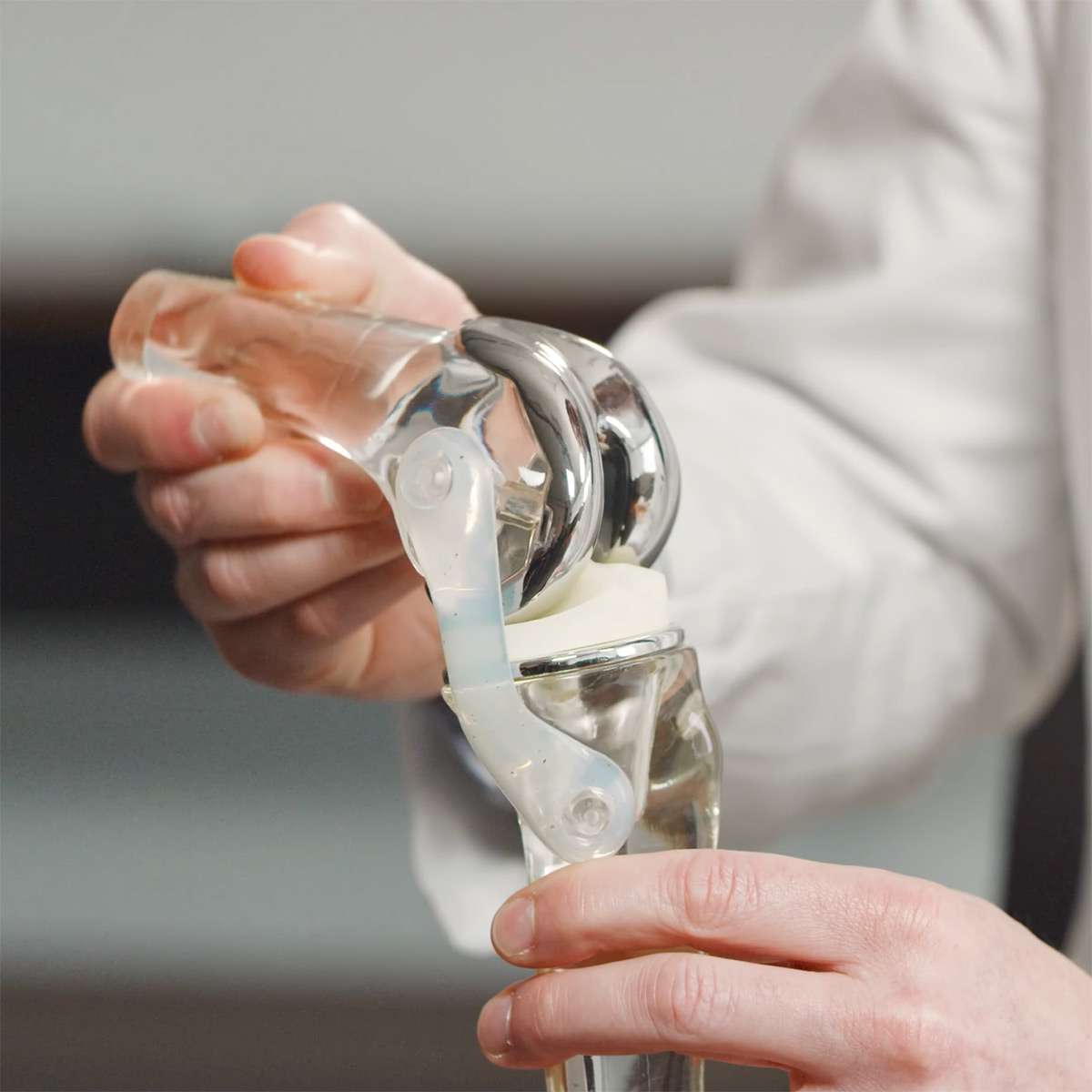
If knee pain caused by arthritis or injury is making it difficult to complete your daily activities and nonsurgical options like medications or walking supports are no longer helping, knee replacement surgery could be an option. People who benefit from knee replacement surgery often have pain or stiffness that limits their everyday activities, pain when walking or climbing stairs, or inflammation and swelling in their knee that does not improve with rest.
Total knee replacement is one of the most common and most successful procedures performed in America. The procedure begins with the surgeon making an incision to get access to the knee joint. During the surgery, your surgeon will remove the damaged cartilage and bone surfaces, and insert prosthetic components that recreate the knee joint.
When only part of the knee joint is damaged, surgeons can sometimes do a partial knee replacement. In this procedure, prosthetic components are placed over only the damaged portion of the bone and the remainder of the native joint is left intact. Partial knee replacements often result in a shorter recovery time, but they are not suitable for everyone. Your surgeon will evaluate you and discuss whether partial or total knee replacement is the best option for you.
Double knee replacement, also known as bilateral knee replacement, is when knee joints in both of your knees are replaced during one surgery. If you need joint replacements in both knees, this can be an option as it requires only one surgery and one recovery period. This results in reduced costs and less time missed from work. However, recovery may be more complex as patients no longer have a stable leg to steady their body on while standing. In addition, the risks of infection and blood clots are increased with bilateral knee replacement. The decision for bilateral knee replacement surgery is a big one; you should talk with your surgeon to see if a double knee replacement is right for your situation.
The surgical procedure itself usually takes about 1 hour, but you will spend most of the day at the facility, preparing for surgery and in recovery. Most patients go home the same day of their surgery. Before leaving the facility, we make sure that you are comfortable, have done well with therapy, and have everything you need at home.
Dr. Gondusky and his team combine cutting-edge surgical techniques and technology to provide patients with an accelerated recovery process. The amount of time will vary for each patient, but most patients should plan to take 3-6 weeks off from work after surgery.
Most people resume driving approximately 2-6 weeks after surgery. You will need to be sure your knee bends enough that you can enter and sit comfortably in your car, and your muscle control provides adequate reaction time for braking and acceleration. This varies significantly between patients, and generally right knees take a little longer than left knees.
After surgery you will feel some pain as a normal part of the healing process. Dr. Gondusky and his staff use a combination of different types of medication for pain relief. The most commonly combined medication groups include local anesthetics, NSAIDs, and acetaminophen, with limited opiates.
Physical therapy is very important after surgery. The amount of motion you have long-term after your knee replacement is much better if you work hard at achieving good motion during the first month after surgery. A physical therapist will provide you with specific exercises to strengthen your knee and restore movement. Physical therapy continues for 2-4 months after surgery.
Most people who have knee replacement surgery experience a dramatic reduction of knee pain and an improvement in the movement and function of the knee. Currently, more than 90% of modern total knee replacements are still functioning well 15 years after the surgery. Most surgeons advise against high-impact activities like running or jumping once you have had knee replacement surgery, as these may speed up the normal wear on your knee. Instead, surgeons recommend participation in low-impact activities like walking, golfing, swimming, or biking. With appropriate activity modifications like these, knee replacements can last for many years. And these activities can be pretty aggressive, such that unlimited hiking and walking is usually possible, and many patients are able to be aggressive in activities like martial arts, pickleball/tennis, skiing, and surfing.
Hip Replacement Surgery
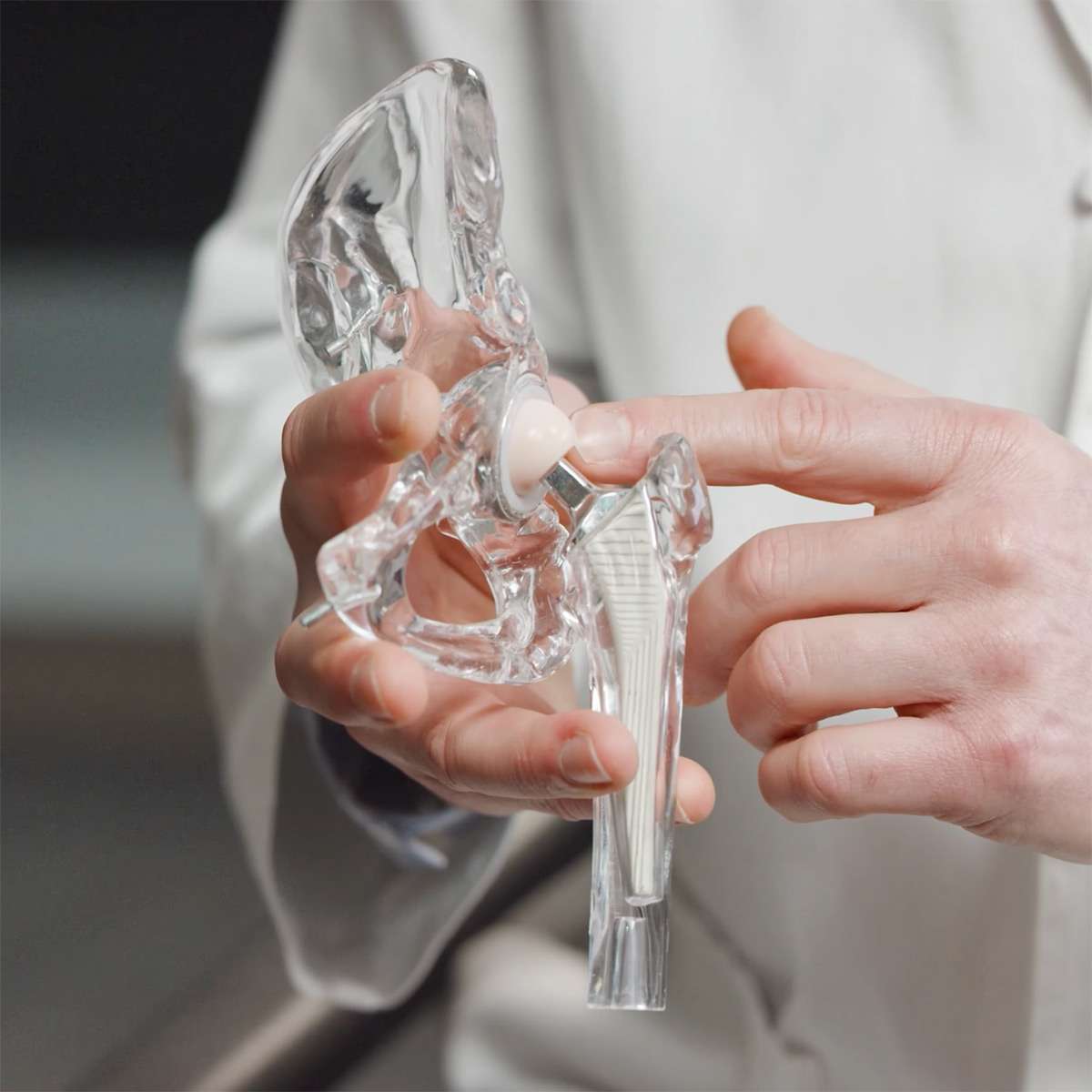
If you have arthritis or other conditions that affect the hip that have not responded to other treatment options, you could be a candidate for hip replacement surgery. Patients often find relief using medications, changing their everyday activities, or using walking supports like canes or walkers. If these treatments have not adequately helped your pain and your ability to move, it may be time to consider hip replacement surgery.
Anterior hip replacement surgery is a minimally-invasive surgery designed to help patients experience less pain and heal more quickly than they would with a traditional surgical approach to hip replacement. In the anterior approach, the surgeon accesses the hip through a small incision made on the outer side of the front of the hip. This approach results in less disruption of the underlying tissue and muscle. The surgeon uses live x-rays throughout the procedure to ensure proper placement and alignment of the new hip joint. Dr. Gondusky is specially and expertly trained in anterior hip replacement. Some patients locally refer to anterior approach hip replacement as the “Jiffy Hip,” a term trademarked by the company that makes a special table that we use to perform the procedure.
The anterior approach to hip replacement surgery has been used since the 1980s and it has gained popularity over the past two decades. It now makes up a significant percentage of hip replacement procedures in America. In the anterior approach, the hip joint is accessed by separating muscles, rather than splitting them. This tends to result in less postoperative pain, a quicker recovery, and a more rapid return to normal activities.
Dr. Gondusky and his team combine cutting-edge surgical techniques and technology to provide patients with an accelerated recovery process. The amount of time will vary for each patient, but most patients should plan to take 3-4 weeks off work after surgery. You should be able to resume most normal light activities of daily living within 3-4 weeks following surgery.
Recovery and rehabilitation will be different for each person. The surgery itself takes about an hour, but you will spend most of the surgical day at the facility. Most patients go home on the day of the surgery. You will walk right away after surgery. Pain should be minimal to mild. Therapy after discharge consists of walking, with the therapist guiding you to transition from a walker to cane within days to weeks. Walking and gentle motion are really all that are required after hip replacement. An elliptical or stationary bike can usually be started 2 weeks after surgery for active, healthy people. After the 4-week mark, a slow progression toward full, aggressive activity is started.
Hip replacement surgery has one of the highest patient satisfaction ratings of any major surgery. The procedure is outstanding in terms of relief of pain and improvement in function. Most people can expect their joint replacement to last for many years. Modern hip prosthetics are made of durable materials such as metal, plastic, or ceramic parts. These implants can last 20 to 30 years, and the risk of failure from wear or mechanical loosening is low.